PTSD Treatment in Edmonton: Integrative Care for Trauma Recovery
– Integrative Care · Edmonton, AB –
Healing Begins When the Whole Person is Treated.
Trauma-informed integrative care in Edmonton – led by a team who knows what it means to run toward crisis.
Eastern and Western medicine working together: acupuncture, functional medicine, Nurse Practitioner services, massage, and mind-body therapies – in one Edmonton clinic built to support those living with PTSD. No referral required. No waitlist.
Program at a glance
Understanding PTSD
What PTSD does to the nervous system
PTSD is not simply an anxiety disorder. It is a fundamental disruption of the brain and body’s threat-response system. When a traumatic experience overwhelms the nervous system’s capacity to process, the amygdala becomes hyperactivated, locking the body into a chronic state of alert even when no danger is present.
This drives dysregulation of the HPA (hypothalamic-pituitary-adrenal) axis: disrupting cortisol rhythms, inflammatory response, sleep architecture, and gut function. Symptoms including flashbacks, hypervigilance, emotional numbing, and physical pain are downstream effects of this systemic dysregulation.
PTSD frequently co-occurs with depression, substance use, and chronic pain: making an integrative, whole-person care team essential for lasting recovery rather than symptom management alone.
For additional information on PTSD in Canada, see the PTSD Association of Canada.
Why integrative care works when standard treatment falls short
The body holds trauma (not just the mind)
Talk therapy alone addresses cognitive processing but does not directly regulate the nervous system or resolve the somatic (body-level) effects of trauma. Physical modalities (acupuncture, massage, craniosacral therapy) work directly on the body’s stress-response mechanisms.
Root causes, not symptom suppression
Functional medicine investigates what’s driving the inflammation, hormonal dysregulation, and nutritional deficiencies that sustain PTSD symptoms. Treating these root causes creates a physiological environment that supports healing.
Coordinated, not siloed
Your acupuncturist, Nurse Practitioner, and naturopathic doctor communicate with each other. Your care evolves as a coordinated plan: not a collection of disconnected appointments.
Complementary to psychological therapy
Integrative care does not replace psychotherapy: it creates the physiological conditions in which psychological work becomes more effective. Many patients find body-based approaches allow them to engage more fully in trauma-focused therapy.
The PTSD cycle: where integrative care intervenes
PTSD is not a single event. It is a self-reinforcing cycle. Understanding where it breaks down helps explain why a multi-modal approach produces better outcomes than any single treatment.
How Red Leaf Wellness intervenes at every stage
Functional Medicine: cortisol, inflammation & root-cause testing
Massage & Osteopathy: somatic trauma release & vagal tone restoration
Nutrition: gut-brain axis support & neurotransmitter balance
Mind-Body Therapies: nervous system regulation & somatic trauma integration
Integrative treatments for PTSD recovery in Edmonton
Every modality below plays a distinct role in PTSD recovery. Our practitioners coordinate across disciplines so your treatment evolves as a unified plan, not a series of isolated appointments.
Clinical spotlight
The NADA Protocol: Acupuncture Designed for Trauma
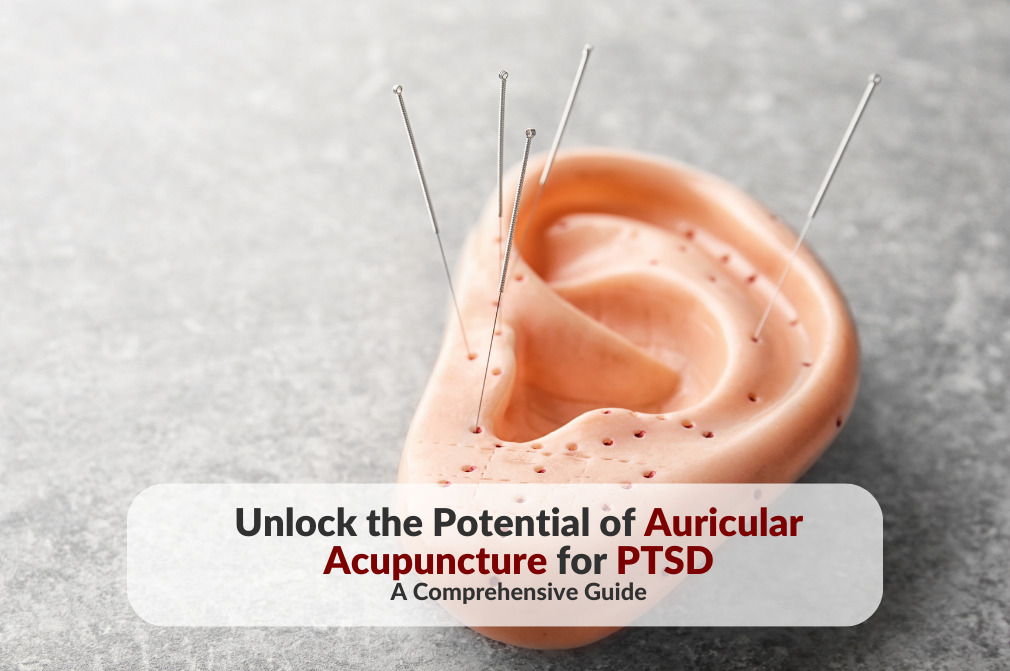
The NADA (National Acupuncture Detoxification Association) protocol is a standardized five-point auricular (ear) acupuncture technique developed for use in trauma, addiction, and disaster response settings. It targets five specific points: Sympathetic, Shen Men, Kidney, Liver, and Lung – to calm the autonomic nervous system and interrupt the body’s chronic stress response.
Multiple clinical studies, including research reviewed in the Journal of Traumatic Stress, have demonstrated meaningful reductions in PTSD symptom severity, anxiety, insomnia, and hyperarousal. The protocol has been used extensively with military veterans and first responders. Our acupuncturists are trained in NADA administration and integrate it into individualized PTSD treatment plans.
Our first responder team
Understanding Trauma From the Inside
Many of our practitioners have worked as paramedics and nurses on the front lines of emergency medicine. They have run toward the same crises that bring patients through our doors: accidents, violence, sudden loss, mass casualty events. They bring direct, lived experience with occupational trauma into every treatment plan.
This is something you will not find at a typical wellness clinic. When you describe the hypervigilance, the intrusive memories, the inability to switch off after a shift: you are talking to someone who understands from the inside, not just the textbook.
That shared experience changes the therapeutic relationship. It removes the need to explain why PTSD looks the way it does in high-functioning, high-performing people. And it means our treatment approach is calibrated for the specific physiological and psychological profile of occupational trauma: not a generic wellness protocol.
Why Red Leaf Wellness for PTSD
Practitioners who understand occupational trauma
Paramedics and nurses on our team mean you don’t spend your appointment explaining what PTSD looks like in first responders, veterans, or healthcare workers.
Four modalities, one coordinated plan
Acupuncture, functional medicine, massage, and nutritional support working together: not in silos. Your providers coordinate from the start so each session builds on the last.
No referral, no waitlist
Book directly through JaneApp. If you have an existing GP, psychiatrist, or therapist, we will coordinate and report back: keeping you in control of your care.
Complementary to psychological therapy
We do not replace your psychologist or psychiatrist: we create the physiological conditions that make their work more effective. Many patients report being better able to engage in trauma-focused therapy once body-level dysregulation is addressed.
In-clinic and virtual
Edmonton clinic for hands-on treatment. Virtual appointments available across Canada for functional medicine, nutrition, and NP consultations: see our team page for provincial licensing.
Who comes to us for PTSD treatment
PTSD presents differently depending on its origin and duration. Our approach is adapted to your specific experience, not a generic trauma protocol.
First Responders & Veterans
Paramedics, police officers, firefighters, military personnel, and ER nurses experiencing occupational PTSD from cumulative or acute traumatic exposures. Our practitioners have worked in these environments.
Childhood & Relational Trauma
Adults navigating complex PTSD from childhood experiences, abusive relationships, or prolonged relational trauma. Somatic and integrative approaches can be especially effective where verbal therapy has reached its limits.
Accident & Injury Survivors
Individuals experiencing PTSD following serious accidents, medical trauma, assault, or sudden loss. Often accompanied by chronic pain (which acupuncture, massage, and functional medicine address simultaneously).
Vicarious & Occupational Trauma
Healthcare workers, social workers, journalists, and others with secondary traumatic stress from sustained exposure to others’ suffering. Often unrecognized and undertreated: our team is equipped to work with this presentation.
Why specialized PTSD care matters
“PTSD is one of the most pervasive and debilitating of the anxiety disorders, yet it remains significantly undertreated, particularly among first responders, where stigma and access barriers compound an already high-prevalence occupational exposure.”
First responder statistics from the Mental Health Commission of Canada. General PTSD prevalence from the PTSD Association of Canada. Red Leaf Wellness is committed to evidence-informed, trauma-focused integrative care.
Practical tips for managing PTSD day-to-day
These strategies work alongside professional care (not instead of it). For personalized support, book a free clinician chat or call Alberta Health Services HealthLink 811 if you are in acute distress.
Ground yourself in the present
When triggered, use the 5-4-3-2-1 technique: identify 5 things you can see, 4 you can touch, 3 you can hear, 2 you can smell, 1 you can taste. This activates the prefrontal cortex and interrupts the amygdala’s threat response. Practice it when calm so it is accessible when you are not.
Regulate through breathing
Slow, diaphragmatic breathing directly activates the vagus nerve and shifts the nervous system from sympathetic (fight-or-flight) to parasympathetic (rest). Try box breathing: inhale 4 counts, hold 4, exhale 4, hold 4. Even three cycles can meaningfully reduce hyperarousal. Consistent practice creates lasting neurological change.
Map your triggers
Keeping a brief daily log of when symptoms flare and what preceded them builds pattern recognition that takes the element of surprise out of triggering. Over time, this reduces the sense of being at the mercy of your own nervous system and gives your care team specific data to work with in treatment planning.
Protect your sleep architecture
PTSD severely disrupts sleep, and sleep disruption worsens every PTSD symptom. A consistent sleep-wake schedule (even on difficult nights) helps recalibrate circadian cortisol rhythms. Avoiding screens and alcohol in the two hours before bed removes two of the most common sleep architecture disruptors. Discuss sleep support options with your functional medicine practitioner.
Edmonton trauma care network
Edmonton trauma resources we trust and refer to
Red Leaf Wellness is one part of Edmonton’s trauma care network. The organizations below provide services and supports outside our clinical scope: we respect each of them and refer patients accordingly.
Common questions about PTSD treatment in Edmonton
Ready to take the next step?
PTSD care in Edmonton – on your terms
Book directly: no referral, no waitlist. Or start with a free clinician chat to find out which services are the right fit for you.
Phone: (780) 633-7538 | info@redleafwellness.ca